What Is Screen Printing?
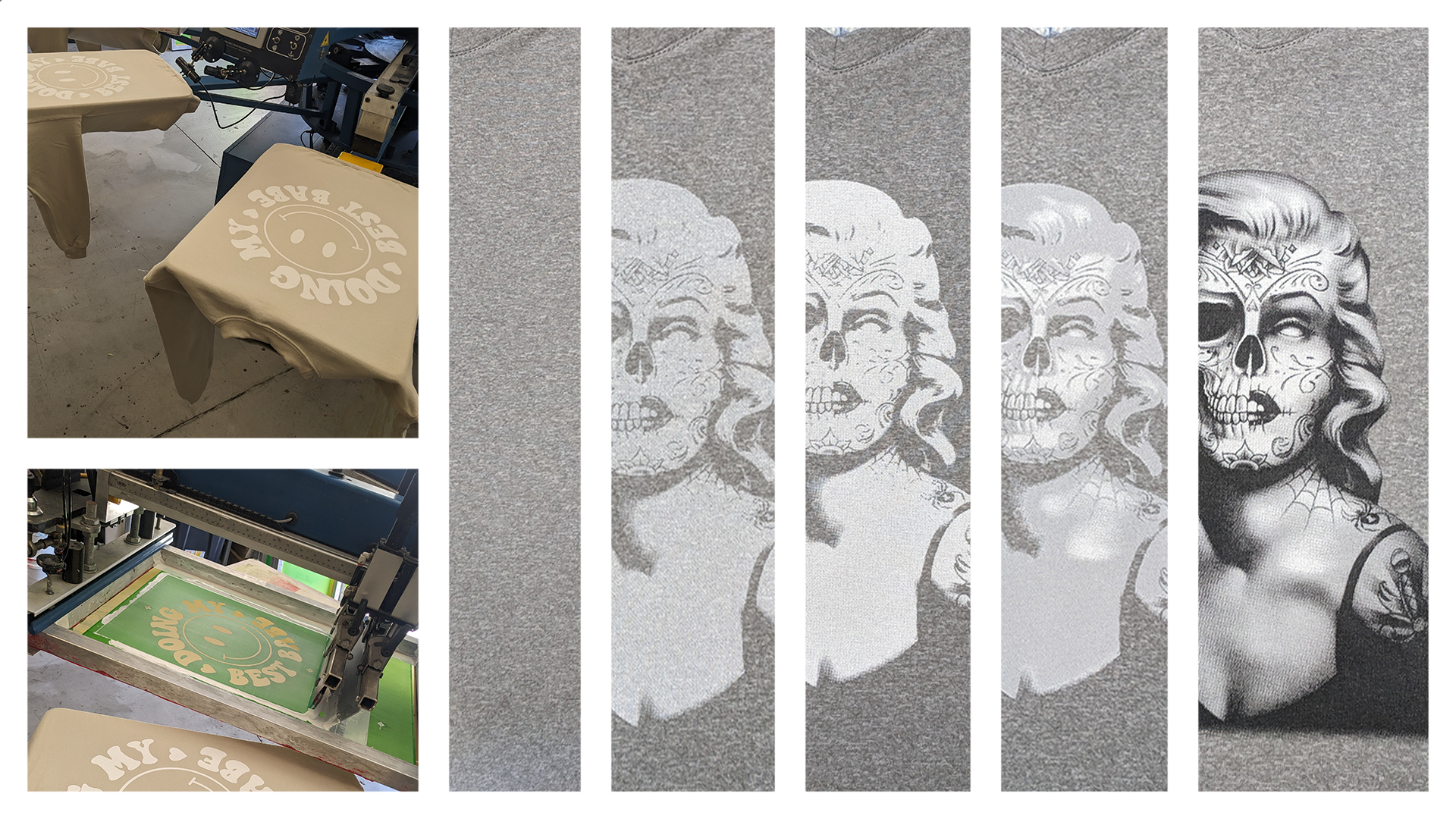
Screen printing forces ink through a fine mesh screen onto fabric, one color at a time. Each ink color requires its own screen, burned with a photographic stencil of that color layer. It's how most of the shirts you see in department stores were made.
The result is vibrant, flat, and extremely durable — screen-printed designs typically outlast the garment itself when cared for properly.
Quality and Durability
Screen printing is the most durable print method for garments. Once cured, the ink bonds permanently with the fabric fibers. Printed shirts can be washed hundreds of times without fading, cracking, or peeling — no special care instructions required.
What Makes It Cost-Effective at Scale
The setup work — burning screens, mixing ink colors, aligning registration — is the same whether you're printing 12 shirts or 1,200. Once the press is set up, production runs at high speed (up to 384 shirts per hour on an automated press).
That's why screen printing gets cheaper per piece as quantity goes up. The setup cost is fixed; you're just spreading it across more garments.
What Affects the Price
Three factors drive screen printing cost:
Quantity — More shirts = lower per-piece cost. The setup fee amortizes across more units.
Ink colors — Each color requires a separate screen. A 1-color left chest logo costs less than a 4-color full-front design.
Print locations — Front only is the baseline. Adding back, sleeves, or additional locations each increases cost.
Screen Print vs. DTF
| Screen Print | DTF | |
|---|---|---|
| Colors | Per-screen setup fee | Unlimited, flat rate |
| Best for | Simple designs, large orders | Complex designs, any order size |
| Durability | Excellent | Very good |
| Feel | Smooth | Soft |
For designs with 1–4 solid colors at 12+ pieces, screen printing is usually the best value. For full-color or photographic designs, DTF is the better choice.
Get a quote — enter your design and quantity to see screen print pricing.